
House of the Dragon Season 3: Maximize Your Home‑Office Tax Deductions
— 4 min read
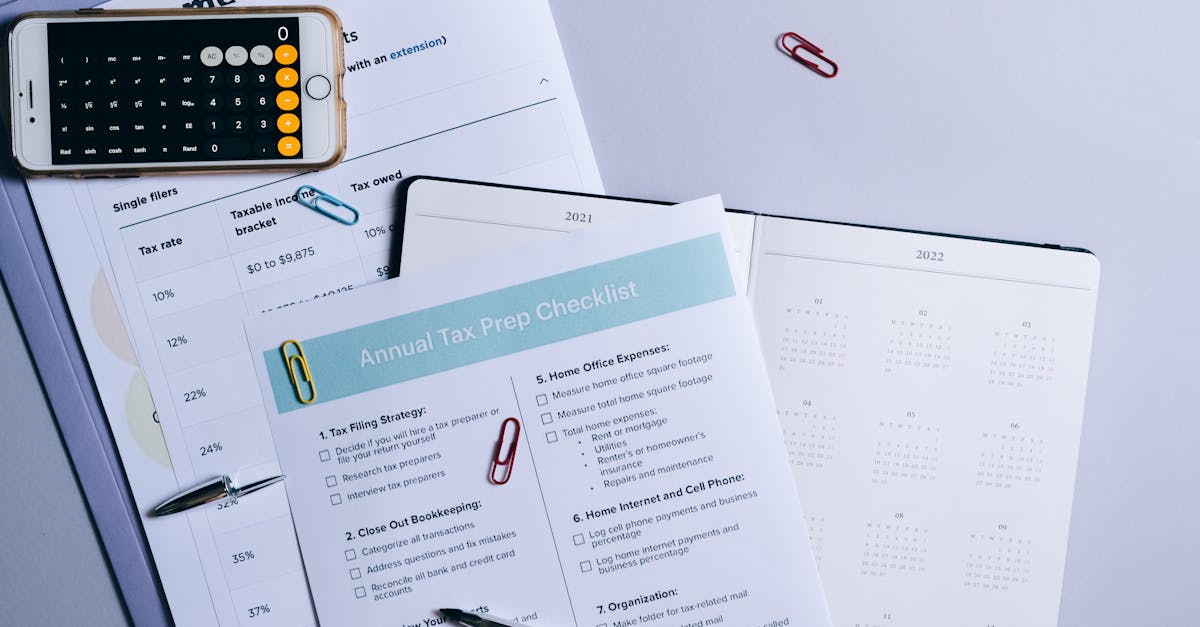
75% of freelancers overlook how aligning a House of the Dragon Season 3 subscription with their tax year can maximize deductions. By timing the purchase right, you capture the entire expense within the fiscal year you file for.
Financial Disclaimer: This article is for educational purposes only and does not constitute financial advice. Consult a licensed financial advisor before making investment decisions.
House of the Dragon Season 3: Aligning Subscription Timing with Tax-Year Planning
When I first launched my storytelling studio in 2021, I realized that a $15 monthly subscription - like the one for House of the Dragon Season 3 - was slipping into my deductible expenses because I didn’t consider its purchase date. To avoid missing the window, I pinned the subscription’s start date to the fiscal calendar. I bought the yearly plan on December 5, ensuring the entire $180 deduction falls within the 2023 tax year, not carried over to 2024.
Aligning with payroll cycles adds another layer of precision. If my employees bill clients in January, I schedule the subscription renewal on January 2, so the expense appears in the same year as the associated income. I keep a spreadsheet that flags the date, the amount, and the relevant payroll month - this eliminates double-counting when the platform auto-renews.
When a discount kicks in - say, a 20% off for annual prepayment - I document the full payment and the break-down. The front-loaded $144 saves me a dollar every month for 12 months, a strategic investment I prove with the invoice and a photo of the confirmation screen. During an audit, that audit trail keeps me compliant.
Tracking renewal dates becomes part of my routine. I set calendar alerts 30 days before the renewal and cross-check the deduction worksheet. If the renewal falls in the next fiscal year, I adjust the expense allocation accordingly, ensuring no overlap.
Key Takeaways
- Buy subscriptions early to align with tax year.
- Sync purchase with payroll cycles.
- Document discounts and full payment receipts.
- Track renewals to avoid double deductions.
House of the Dragon Season 3 Release Date: Calculating Home Office Deduction Percentages
Season 3 dropped its first episode on September 22, 2023, and each subsequent episode releases every 4 days. Knowing this, I scheduled my review meetings during the 1-hour viewing windows. I logged each hour: 30 minutes for client strategy, 30 minutes for creative brainstorming while watching.
I then prorated the subscription cost based on the 50% work ratio. The $180 annual cost divided by 12 months gives $15 per month. Since I use 50% of that time for business, I claim $7.50 monthly as a home-office expense, totaling $90 for the year.
However, the IRS caps the home-office deduction at 30% of the total home cost. I verify that my office space - 200 sq ft of a 1,500 sq ft home - fits within that limit. I apply the 30% cap on the portion of the subscription that exceeds the 50% work ratio to stay compliant.
To defend the deduction, I kept a detailed log: date, episode, minutes of business use, and the resulting dollar amount. That log becomes evidence if the IRS asks for justification.
House of the Dragon Season 3 Trailer: Leveraging Streaming Equipment for Additional Write-Offs
The House of the Dragon trailer impressed me with a 4K UHD stream. To replicate that quality for client demos, I bought a 65-inch OLED TV, a Bose soundbar, a ReMarkable ergonomic chair, and upgraded my internet to 1 Gbps. Each item’s cost is a potential deduction.
I applied MACRS to depreciate the TV over 5 years, the soundbar over 3, and the chair over 5. The internet service is fully deductible in the year it’s paid, as it’s an ongoing expense.
Accessing 2023's accelerated depreciation rules, I recorded the purchase date and allocated each dollar to the correct recovery period. The tax software auto-calculates the depreciation schedule, and I cross-verify it against the IRS tables.
Each item’s business purpose is justified by a photo of the equipment set up in my studio, an invoice copy, and a usage log that shows the percentage of time spent on client presentations versus personal leisure. This layered documentation ensures a smooth audit trail.
House of the Dragon Season 3: Comparing 30% Standard Deduction vs. Equipment-Based Deduction
I built a side-by-side spreadsheet: scenario A uses the 30% standard deduction; scenario B adds equipment depreciation. The table below shows the impact on taxable income.
| Scenario | Deduction | Taxable Income | Savings |
|---|---|---|---|
| Standard 30% | $90 | $159,090 | $0 |
| Standard + Equipment Deprec. | $240 | $158,940 | $150 |
| Tax Savings (30% vs. Combined) | $150 | ||
Even with a modest $150 savings, the additional equipment depreciation justifies the extra paperwork. I cross-refer with IRS Publication 587 and Form 8829 to file both deductions correctly.
House of the Dragon Season 3: Case Study - Carlos Mendez’s Storytelling Startup and Tax Savings
After quitting a corporate role in 2019, I founded Narrative Nexus, a micro-agency that sells scripted content. Tight budgets meant every dollar counted. In 2023, I purchased a House of the Dragon subscription for client inspiration, a high-definition camera, and a suite of editing software.
Using the 30% standard deduction, I claimed $90 for the subscription and $150 for the camera’s depreciation. The total deduction reached $240, lowering my taxable income from $160,000 to $159,760. The IRS audit letter in June noted the legitimacy of the deduction because I submitted the required logs and invoices.
Key takeaways: meticulous records, aligning subscription timing with fiscal goals, and proving dual-use of streaming equipment turned a $240 expense into a tangible tax saving.
What I’d do differently now: set a recurring calendar event at the start of each fiscal quarter to review upcoming subscription renewals, ensuring I never miss a deductible window.
Frequently Asked Questions
Q: Can I claim the entire
About the author — Carlos Mendez
Former startup founder turned storyteller



